Impellor Group

Turning Expertise into Growth

Call 877.358.8413


  • Welcome
  • For Accounting Firms
    • Client Advisory Capability Lab
    • Constructive Client Conversations
    • Proposal Mastery
    • Rainmaker Mentor
    • Speaking
  • About
  • Contact
  • Insights

In Defense of the Value of LinkedIn for Seller-Doers

March 27, 2025 by Jim Rogers

During a recent Seller-Doer Activation training session about LinkedIn and how to use it effectively for business development, several participants questioned its value. Their skepticism derives from their being besieged by talent acquisition departments and headhunters. They perceived it as being of low value to them.

So, are they right? Has LinkedIn lost value for business development for A/E/C professionals? I would say resoundingly no. LinkedIn is still a valuable business development tool for A/E/C professionals—if used strategically. While it’s true that LinkedIn has become saturated with recruiters, job seekers, and a fair share of low-value content, it remains a powerful platform for seller-doers to build relationships, establish expertise, and stay visible to potential clients.

Why LinkedIn Still Matters for A/E/C Business Development

Here are five compelling reasons A/E/C professionals should have a LinkedIn presence and periodic engagement on the platform, whether seller-doers or not.

  1. Networking & Relationship Building – LinkedIn allows professionals to connect with potential clients, partners, and industry influencers. This is crucial in the A/E/C industry, where relationships are paramount. Seller-doers can use LinkedIn to nurture existing relationships and build new ones, leading to business opportunities.
  2. Demonstrating Thought Leadership – Regularly posting about industry trends, project successes, and insights into engineering challenges can position a seller-doer as an expert. This builds credibility with potential clients who may later need their expertise. Even if you don’t write the posts or articles yourself, you can simply reshare information of value—a practice called content curation.
  3. Keeping Up with Industry Trends & Client Movements – LinkedIn is where professionals announce promotions, job changes, and firm mergers—useful intel for strategic networking, reconnecting with past clients, and staying abreast of your competition.
  4. Referrals & Introductions – Unlike cold calls, a well-maintained LinkedIn presence allows for warm introductions and referrals between industry contacts.
  5. Event & Conference Engagement – Many industry conferences and networking events have active LinkedIn discussions before and after the event. Engaging in these conversations can strengthen relationships with key decision-makers.

The Problem: Passive Use vs. Active Engagement

Most A/E/C professionals underutilize LinkedIn. They won’t see much value if they only have a profile but never engage. But those who post relevant insights, comment on industry discussions, and connect with key people see measurable benefits.

Rather than see LinkedIn as a lead-generation platform, treat it as a relationship maintenance tool. LinkedIn becomes much more useful if you use it to:

  • Follow clients and industry leaders
  • Share relevant technical insights
  • Engage with posts from existing contacts
  • Stay informed about project and personnel changes

The bottom line: LinkedIn can be a nuisance if used poorly, but it remains a valuable business development tool for seller-doers who engage strategically. If you don’t use it, you may be ceding visibility to competitors who do.


Filed Under: Architecture, Business Development, Engineering, Networking, Seller-Doer

14 Essential Skills to Thrive as a Successful Seller-Doer

December 18, 2024 by Jim Rogers

In today’s competitive business landscape, the seller-doer role is becoming increasingly vital in professional services. As a professional in your field, whether accounting, architecture, engineering, consulting, or law, your ability to seamlessly integrate business development with project execution can set you apart from your peers. However, excelling in this dual role requires a diverse set of skills.

In this blog, I will share 14 essential skills that will equip you with the tools and insights needed to thrive as a successful seller-doer. Whether you’re just starting or looking to enhance your capabilities, these skills are the building blocks for your career success.

Skill #1: Relationship Building. 

While conducting research for my book, Becoming a Seller-Doer: Succeed at Business Development and Take Command of Your Career, I surveyed over 1,200 A/E/C professionals across various industries. Relationship building topped both our surveys (one quantitative and the other qualitative) as the most important skill for seller-doer success. 

With that being said, take the time to build rapport with your clients through verbal and nonverbal communication, active listening, social awareness, and etiquette.

Skill #2: Public Speaking. 

The fastest and most effective way to become a better speaker is to do it. A successful seller-doer understands how to deliver a range of effective talks, such as project presentations, technical education sessions, and webinars. Toastmasters is an organization devoted to developing public speaking and leadership skills.

Skill #3: Business Writing.

Our definition of business writing skill is “The ability, in a corporate setting, to write clearly to inform or persuade.” To achieve success as a seller-doer, you don’t have to become a stellar writer—it will suffice to write clearly and concisely. Currently, Grammarly is the best tool for improving your writing. It even explains it’s recommendations. If you’re using AI to help you write, beware: most generative AI tools are subpar at grammar, which creates clarity.

Skill #4: Storytelling.

Tell stories that engage and influence the listener. Storytelling is essential in marketing and business development. Can you tell your story and your firm’s at a networking event, during a business development call, or in a project meeting? These are all places where selling “happens.”

Skill #5: Market & Client Research.

Acquire Industry Knowledge: Stay updated on the latest trends, innovations, and challenges within your industry. 

Gather Client Intelligence: Gain deep insights into your clients’ businesses, needs, and pain points. This includes understanding their goals, strategies, and decision-making processes. 

Gain Competitor Understanding: Analyze your competitors to identify their strengths and weaknesses. This knowledge allows you to differentiate your services and highlight your unique value propositions.

Skill #6: Capture Planning.

Create a plan for acquiring client business. The key is to follow a process of inquiry that will help you decide whether to spend time and treasure in pursuit of a particular contract. When pursuing major accounts, an account pursuit plan is invaluable. If you want templates for capture plans, send me an email: jim@sellerdoeracademy.com

Skill #7: Making Go/No-Go Decisions.

Distinguish worthwhile client pursuits from poor ones. Experienced managers will be expected to have the business acumen and self-awareness to use their understanding of the client, the industry, and the competitive landscape.

Skill #8: Internet Marketing & Networking.

Merriam-Webster defines networking as “the cultivation of productive relationships for employment or business.” This definition works nicely because it is situation-independent and ignores the activity’s medium. You can develop productive relationships at business association meetings while “working the room,” but you can also build relationships by being active on LinkedIn. Use the internet to increase your visibility, build authority, and engage with prospects and clients.

Skill #9: Prospecting.

Find, qualify, and pursue leads for new clients. Think of prospecting this way: It’s your effort to generate leads for new clients through networking, referrals, and proactive phone calls.

Skill #10: Questioning.

Questioning is the process of discovering client needs and wants. Ask effective questions that uncover client needs and preferences. Don’t think of it as selling; think of it as discovery. The art and science of questioning also help a client feel heard and valued.

Skill #11: Positioning.

The act of positioning is to stake out territory in the client’s mind about your attributes and strengths and how they will benefit by working with you. Communicate your firm’s capabilities, markets served, accomplishments, and value proposition.

Skill #12: Proposal Writing.

While all business writing demands writing with clarity, proposal writing is sales writing. It is about convincing decision-makers that you are the best fit for a particular project. Write proposals and letters that close business.

Skill #13: Interview Presentations.

Mastering interview presentations is crucial for winning over clients during short-list interviews. Customize your presentation to address the client’s specific needs and concerns. Clearly articulate your value proposition and highlight the benefits and outcomes the client can expect from working with you. Present your ideas confidently and clearly. Use compelling storytelling techniques to connect with your audience and make your message memorable.

Skill #14: Negotiation.

When closing contracts with clients, much of that responsibility will fall on the principal, who must put their imprimatur on the contract; however, they will rely on the other senior project members to help. Agree on mutually beneficial terms to be formalized in a contract.

Mastering these 14 essential skills will not only equip you to thrive as a seller-doer but will also position you as a key player in your firm’s business development efforts. The ability to build relationships, communicate effectively, and strategically navigate the business landscape is what sets successful seller-doers apart. 

By focusing on these skills, you can take command of your career and make a significant impact on your firm’s growth and success. Embrace the journey of continuous learning and skill development, and watch your career soar to new heights.

Interested in learning more about becoming a successful seller-doer?

Purchase my book on Amazon!

Filed Under: Business Development, Communication, Engineering, Generate Leads, Keep Clients, Networking

Four Ways Effective Listening Helps With Business Development in Professional Services

April 17, 2023 by Jim Rogers


Effective listening skills 

Effective listening skills are crucial for any consultant looking to provide exceptional service and build a successful practice. When consultants actively listen to their clients, they can better understand their needs and tailor their services to meet those needs. This blog post will explore how effective listening skills help with consultative selling.

1. Build Rapport

Building rapport with the client is the first step in any successful consulting engagement. When a consultant actively listens to their client, they can build rapport by showing genuine interest in what the client says. Active listening includes asking open-ended questions and following up on the client’s responses. By doing so, the consultant can build a relationship with the client, increasing their chances of being hired for future projects.

2. Identify Needs

One of the most critical components of effective listening is identifying the client’s needs. When a consultant listens actively, they can pick up on the client’s pain points and offer solutions to those problems. Understanding the client’s needs can help the consultant position their services as the solution. This can lead to a more targeted consulting engagement and a higher chance of delivering value to the client.

3. Overcome Objections

Every consulting engagement will have complaints from the client, and effective listening skills can help overcome those objections. When a consultant actively listens to the client’s complaints, they can address them directly and offer solutions to alleviate any client’s concerns. The consultant can build trust with the client and increase their chances of delivering successful outcomes.

4. Improve Client Experience

Active listening doesn’t stop after the consulting engagement is completed. When consultants listen to their clients, they can gather feedback and use it to improve their services. Client feedback can also help consultants identify new opportunities for delivering value. By actively listening to their clients, consultants can create a better overall experience and increase client loyalty.

In conclusion, effective listening skills are crucial for any consultant looking to provide exceptional service and build a successful practice. By actively listening to clients, consultants can build rapport, identify needs, overcome objections, and improve the client experience. If you’re a consultant looking to strengthen your skills, focusing on active listening is an excellent place to start.

Filed Under: Business Development, Communication, Engineering, Networking, Professional Services Marketing, Sales, Seller-Doer

Level the Playing Field with Strategic Alliances

February 15, 2023 by Jim Rogers


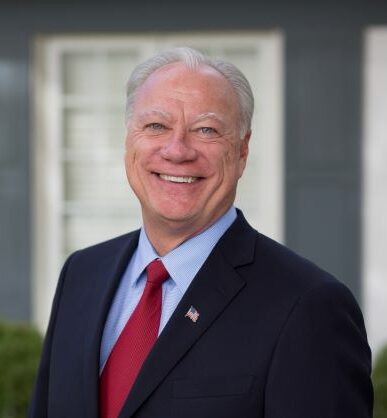
Photo of Steve Osborn

Steve Osborn, P.E.
Founding Principal, CE Solutions

One of the 44 executives I interviewed for the book, Steve Osborn, Founding Principal at CE Solutions, Inc., struck out years ago to create his own firm. In the early years, he faced some limitations deriving from the size of his startup. He shared how he overcame that obstacle and landed a dream client by creating a joint venture with several small- and mid-sized firms. This post is an excerpt from my interview with Steve. 

Jim: Can you tell me about a pursuit that you had – whether it was a dream project or client – and what you did to win it?

Steve Osborn: Sure. The first one that comes to mind was when CE Solutions was probably seven or eight years old – so we were a lot smaller and probably had five or six people. We had a relationship with someone who was a project manager for the city because when I worked at a larger firm previously, we did a big project with this individual. Indianapolis was getting ready to expand the existing convention center, which was a fairly significant project – around $275 million. This gentleman I’m referring to was assigned the project manager role and led the selection process. He worked with advisory councils of notable city officials and outside consultants that were assigned by the mayor and the governor.

It was a pretty interesting and high-profile group of folks. Through SMPS and other activities over the years, I developed relationships with quite a few of those individuals. It just kind of happened that they were the ones involved with this process – but I had a really good relationship with the individual who was leading the selection process.

There was no way CE Solutions would get selected by themselves to provide structural engineering on a $275 million project. We just didn’t have the portfolio developed yet – didn’t have enough staffing capacity to do it. However, it was a project that fit really well into our core mantra of making a difference in the communities where we live and work – so we were looking to get involved somehow.

The governor, at the time, was really promoting Buy Indiana – wanting to keep it local by helping firms that wouldn’t ordinarily get projects like that and find creative ways to get them involved. I put the old thinking cap on and started kicking it around with some of my fellow clients and folks that were also pursuing this architecturally – and came up with the idea of putting together a joint venture with a couple of our competitors of like size and mind. I reached out to other competing structural engineering firms of similar size and a geotechnical engineering firm, and the four of us put together a joint venture called Structural Alliance.

I laid the idea out in front of the individual who was spearheading the selection process, and he said, “You know, this looks really interesting. You’re making my job really easy. This is exactly what the governor is talking about – helping firms like yours and others who wouldn’t get the job on their own and creating a way to maybe be involved.” He said, “I can’t guarantee anything. There’s a lot of people involved in the selection process.” All I was looking for was, “Does this make sense? Is this something we should pursue before we go and invest a lot of money in the formation process and everything else?” He gave me the encouragement to go ahead and do it without any guarantees, and we knew we were at risk.

Lo and behold, we were selected. We didn’t get the master structural contract, which would have been a really long shot for us – but we had people pulling for us for that role. In the end, they said even though we were all established firms, we hadn’t worked together as a joint venture, and this would be our first project, and it’s a fast-track project. It’s a high-profile project. They didn’t want to put us out there and stretch us too far – but they gave us an associate role, which they really didn’t have to do. It was an extraordinary achievement, in my opinion, and a huge success. It was nice to have the JV partners all sitting in the room that day when the selection happened, and it was announced publicly. It was a great day.

Filed Under: Architecture, Business Development, Engineering, Leadership, Networking, Seller-Doer

The Importance of Networking

February 8, 2023 by Jim Rogers

Joe Viscuso, SVP and Director of Strategic Growth

One of the 44 executives I interviewed for the book, Joe Viscuso, SVP and Director of Strategic Growth at Pennoni, discussed starting his own company early in his career and how networking positively impacted his success. This post is an excerpt from my interview with Joe. 

Joe: After I left college in ’73, I went to grad school and took night classes. Six years later, once I had completed my graduate degree and had my PE license, I started my own company – so I was relatively young at the time.

One of my early decisions was that I wanted my own business. For six or nine months, I left consulting and worked for a fast food restaurant called Gino’s, which at the time had even more restaurants than McDonald’s.

The economy was not in good shape. I saw that they were trying to shed potential sites rather than build restaurants. I decided I would form my own business – and it was right in the middle of a recession, which was probably even crazier.

Many of my peers were members of ASCE, ASME, and several other trade organizations — and to me, as a business developer, that never made sense. How would I get business if I was in a room full of people just like me, looking for the same kind of business?

I decided that I needed to take another course of action to develop my business. I joined the Chamber of Commerce and the Economic Development Council — business associations where people might be looking for people like me. That early career decision turned out to be one of my best because I was in a room full of like-minded people who, when you peel the onion,  are all looking for business and to make connections. Rotary was another great one for me.

It’s like going to a high school dance. It’s tough to ask that first girl to dance, right? It felt similar because I was the rookie in the room. A lot of folks were older and obviously more seasoned than me — I was a little intimidated. It took me a year or two to realize that age wasn’t a factor because we all shared a common element — everyone was looking to grow their business.

Something that can be frustrating is not having instantaneous results. But then six months later, “Joe Brown” would call me and say, “Hey, I met you at a Rotary luncheon. My brother is building a building. He’s going to need some civil engineering services, and I thought of you.” Then all of a sudden, the connections start to happen. I learned that you don’t necessarily get instantaneous gratification.

Anytime I joined an organization, I usually made it through the ranks. I became very involved. I have been on executive committees and eventually became the board chair of quite a few organizations.

Filed Under: Architecture, Business Development, Engineering, Networking, Seller-Doer

Participating In Professional Societies

February 1, 2023 by Jim Rogers

Photo of Steve Osborn

Steve Osborn, P.E.
Founding Principal,
CE Solution

One of the 44 executives I interviewed for the book, Steve Osborn, Founding Principal at CE Solutions, Inc., discussed his involvement in professional organizations. He credits these organizations for attributing to his professional development. This post is an excerpt from my interview with Steve. 

Jim: Thinking back to the early part of your career, was there something that you were intentional about in terms of developing skills that later helped you in sales, business development, and marketing?

Steve Osborn: The first company I worked for after I got out of school was very supportive of my participation in ASCE. I was pleased that they supported that. A lot of it was on my own time, but a lot of it was on company time. I learned so much from a leadership standpoint – how to run meetings, communicate, manage, and organize events. I went through all the different leadership roles up to the president and got to experience it from each position, including committee activity.

As my career developed, I reached a point where I was with a different firm, and my responsibilities included managing and overseeing the production of the vertical market. The company I went to was primarily focused on the horizontal or transportation business, and the owner wanted to expand their business into the vertical or building side of things. I came on board to do that. All of sudden, my role changed. I was responsible for finding business, as well as helping grow and manage a division of business for a firm. I had no formal business education – I have a degree in civil engineering.

So I looked for ways to get smart quickly and for mentors. Through ASCE, I got a chance to build relationships with some of the business owners of civil engineering firms around the city. I took advantage of those relationships. I met with them, asked questions, and considered them mentors. During that time, I got introduced to an organization called SMPS (Society for Marketing Professional Services) and immediately saw that it would be a target-rich environment for me as a consultant. There were client opportunities and relationships within that organization.

There was also great educational programming for exactly what I needed, which was marketing professional services. I got involved in SMPS and went through the leadership structure. I’m still active today and also an SMPS Fellow. I go to their national conference every year. It helps me build the business. I learned a lot about how to do business development and marketing in our profession and also how to build a network. It was really important to me at the time of starting my own business because I built it around the knowledge and relationships that I developed through the SMPS organization. I have grown my business by continuing to stay active in that organization – learning and gaining knowledge.

We’re also a member of ACEC and have been for years – ever since I started the business. The difference is ACEC is a firm membership or company membership, whereas SMPS is an individual membership. I was active in ACEC before I started my firm, too, but I really needed to build a client network, and I didn’t see that in ACEC as quickly as I did through SMPS.

Jim: At what point in someone’s career do you think it might be of value to join SMPS?

Steve Osborn: It makes sense for anyone who has a responsibility to develop and maintain client relationships to be a participant in SMPS meetings and learn their best practice in that regard. If you have marketing professionals in your organization that are active members of SMPS and have that body of knowledge close at hand, there can be internal training without the engineers having to go to those meetings. But every once in a while, it certainly doesn’t hurt to expose them to that sort of thing, especially if there’s a good webinar or session on a particular subject about client relationship management – even technical writing.

We talk about SMPS a lot in our organization, and our marketing professionals share knowledge internally. Our senior-level folks are the ones that have a lot more front-line client relationship responsibility – but every once in a while, we’ll take one of our young people to a meeting. We encourage them to participate as well. They aren’t necessarily members, but it doesn’t prevent them from going to a meeting here and there.

Filed Under: Architecture, Business Development, Engineering, Leadership, Networking, Seller-Doer

Drawing Younger, Less Experienced Staff into Marketing & Business Development

December 21, 2022 by Jim Rogers


One of the 44 executives I interviewed for the book, Laura Wernick, AIA of HMFH Architects in Boston, discussed how to support younger, less experienced staff in developing their networks and becoming involved in marketing and business development. This post is an excerpt from my interview with Laura.

Laura Wernick: It’s important for me to bring in opportunities or connect younger people in the office to help them build their networks. I’m often doing that initial introduction within the firm as a way of helping and then providing those leads to other people in the office.

They can then develop their networks and become marketers and business development people on their own. So that’s another end of the spectrum — making sure that others in the office have the opportunity to build networks and develop their prospects.

Jim Rogers: How do you know when people are ready to be more involved in business development?

Laura Wernick: I think some people are naturally inclined towards business development. They feel comfortable being introduced to people. They feel comfortable carrying on conversations and pursuing potential clients. So sometimes, it’s obvious.

There are other times when you’re trying to develop a person who may not see this as their forte, but you want to help them grow. So that’s probably the more challenging thing. That’s a little bit more of a push-and-pull situation. And I think it’s a gradual process.

The first layer is just getting them out to meet people in professional organization environments or community events and seeing how they respond, while providing feedback and encouragement. Hopefully, you’re able to push them into other situations and see how they respond at each level. Most architects are not inclined to do business development. They’d much prefer to sit at their desks and solve problems — solve the specific problem that’s handed to them.

So I think it’s about encouraging those with that natural inclination and giving them opportunities. And when do you know? I think that when you’re working with younger people on projects, on actually doing the design and following through with a project, and you see how they’re relating to the clients that they’re working with on a day-to-day basis — you begin to see those who can easily interact with their clients, lead their clients, and gain the confidence of their clients. So you know that those people are going to do well in the larger marketing environment. It just takes some encouragement, support, and opportunities for them to do well.

For other people, I think you just have to keep nurturing and nudging and building them up over time. And ultimately, not everyone will be able to do it easily. So you want to just help people to rise to their greatest potential.

Everybody has to be doing some level of marketing and business development; some people will do well at it, and others will just participate.

Filed Under: Architecture, Business Development, Engineering, Generate Leads, Leadership, Networking, Seller-Doer

Building Recognition for Your Authority

December 12, 2022 by Jim Rogers

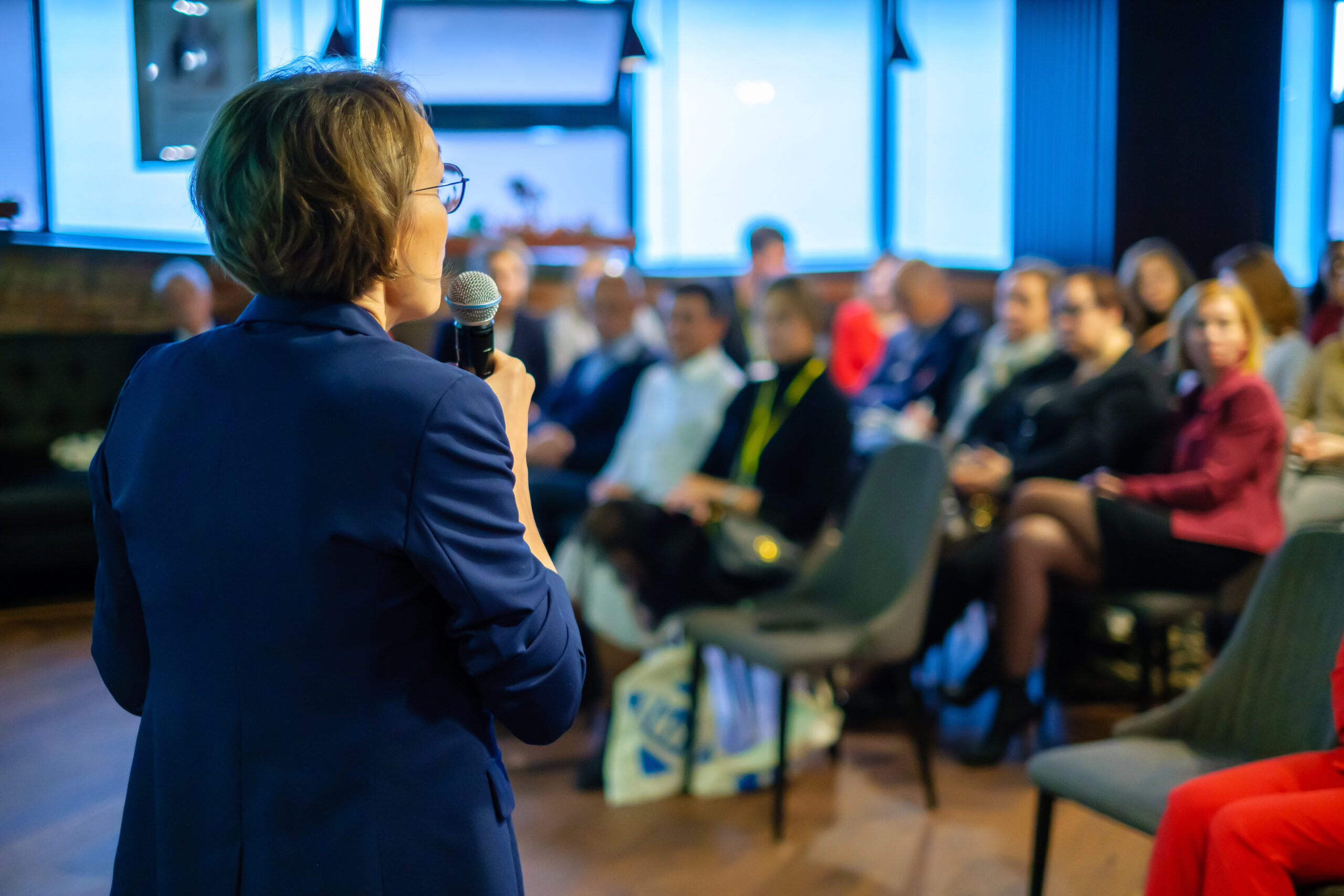
Picture of woman with speaking to an audience at a conference.

Building your authority through speaking at professional and industry conferences.

In Becoming a Seller-Doer, I introduce the RLOCK model that reflects the five stages of the client lifecycle: Recognition, Lead, Opportunity, Close, and Keep. The R is about building recognition for your professional expertise and your firm’s brand and capabilities.

Building recognition can be done in many ways: blogging, writing articles for professional or trade periodicals, speaking at conferences, or conducting webinars or lunch-and-learns.

One of the 44 executives I interviewed for the book, Laura Wernick, AIA of HMFH Architects in Boston, spent the most time talking about how “authority marketing,” as some call it, helped her generate scads of business over the decades. This post is an excerpt from my interview with Laura.

Jim: Tell me about yourself.

Laura Wernick: I’m a graduate of Cornell University. I got my Bachelor of Architecture there and then came to Boston, and I’ve been in the Boston Cambridge area ever since. I’ve been with HMFH Architects for over 25 years. I focus on educational design and how to create the best facilities for teaching and learning, primarily for students in K-12 environments.

Educational design really captured my imagination. We were working with young kids a lot, so everything we did was to stimulate their curiosity and excite them. To be able to design in a very playful and imaginative way – We had some very wondrous and special environments, which were engaging, and I fell in love with that. I also got intrigued by how schools are a piece of the community. They really are community centers.

I got very engaged in the history of school design and if schools have always been that way. There is a fascinating story to school design and how you can use it thematically to look at history, to look at lighting, to look at mechanical systems, and to look at how education has evolved over the years. And that’s my fascination with schools as a building type. It was my entry point into starting to do marketing, even before I knew that’s what I was doing. I turned my interest in school design into research and the research into, early on, some talks at small conferences. And I think for the first conference, I actually paid for my transportation and registration fee because I didn’t even know that that was important to a firm’s marketing.

I think the first place I spoke was at a conference for what, at the time, was called the Council for Education Facility Planners International, CEFPI. It’s since become the Association for Learning Environments, A4LE, but in both manifestations, it focuses on creating great environments for students.

Jim Rogers: Often, people with technical expertise who want to put it out in the world to help others like to go to their professional association to do that. Well, that’s where your competitors, peers, and colleagues are, and if you’re not taking it to where your prospective clients are, then you’re limiting your impact. Is there a talk that stood out for you that paid off or surprised you with the result you got?

Laura Wernick: Well, that first one was quite the learning experience, and I had people asking me questions that I didn’t know the answers to, so I had to learn to sharpen my game. In terms of payoff, I think it helped allow us to spread more nationally. Over time, as I attended these conferences regularly and ultimately became part of the organization’s leadership, I got invited to other places in the country to interview and participate in pursuing schools. So that was one outcome, but I can’t tie it to a single presentation. It was building that over time.

The other thing, as you said, is that there are different architects or competitors at those conferences. The advantage was we could get invited to other places in the country where these teaming partners needed our expertise. I found over time that those peers sometimes became resources for us when we were looking for consultants in a different part of the country.


Filed Under: Architecture, Business Development, Engineering, Generate Leads, Networking, Professional Services Marketing, Seller-Doer

Tips for Growing Your Professional Network in Person and Using LinkedIn

June 23, 2022 by Jim Rogers

Diverse people at the office party

For many professionals, networking conjures the image of a glad-handing politician, working the room with a two-hand handshake and a plastic smile. Or “eating a lot of rubber chicken,” with reference to banquet fare at your typical business luncheon. For many, networking evokes feelings of dread.

Yet, networking is an important part of the success of any business relationship.

You can develop productive relationships at business association meetings while “working the room.” You can also build relationships by being active on LinkedIn, by asking a client or neighbor for an introduction to someone who could help you, or by calling someone spontaneously to ask for business advice.

Networking often results in leads, making it a soft form of prospecting. Remember that you are networking to grow your network, but that may yield interactions with prospective clients.

When in your career to begin networking . . .

It’s best to start right away, says Judy Nitsch, PE’s retired founder of Nitsch Engineering in Boston, because it can take up to 15 years to build a useful network. She encourages you to begin building your network when you’re in your 20s, “because when you hit 35, you’re going to be a project manager and so will your cohort—they could be an owner, or they could work for a state agency, or they could be a potential teaming partner. You’ll be expected to bring in work, and if potential clients are people in your network, that will be easier.”

Nitsch points out that many of the professional societies and industry organizations, such as ULI, NAIOP, and CREW Network, have young professionals’ groups—a helpful and non-threatening way to start networking. “One year, one of our engineers who was six years out of college was chair of the Boston Society of Civil Engineers Younger Member Committee,” she says.

This young engineer was not only developing her network early, but she also was becoming known to the more senior members who were owners and at public agencies. A byproduct of attending networking events is that you can build skills that support you in other ways. It lets you practice your interpersonal skills, including your effective listening skills. If you’re just starting out, lean into your discomfort and attend at least two events a year; if you’re ready to take the next step, double that number.

You know by now that volunteering is an essential theme of this book. Joe Viscuso, SVP of Pennoni, points out that some firms will offer the opportunity for young professionals to attend events, like a business cocktail social, and no one takes them up on it. At the last minute, a partner may say, “We’ve got two extra seats at our banquet table. Who wants to go?” No one raised their hand. Joe advises, “Cancel your other plans for the evening and raise your hand for that opportunity.”

The Elevator Speech

When networking or being active in the community, it’s important to introduce yourself in an interesting way. Practicing an “elevator speech”—a familiar term describing a time-condensed introduction—is an effective way to hone your skill in introducing yourself. In networking, you’ll need three flavors of this speech: one for the non-professional (e.g., someone at church or a Chamber of Commerce meeting), one for the A/E/C professional (say, at an ASCE conference), and one for LinkedIn.

The Elevator Speech You Use When Talking to a Layperson

Andy Bounds, a communications consultant in the United Kingdom, offers some spot-on advice for composing your quick self-introduction, as paraphrased below:

First impressions drive everything. And how you introduce yourself will be other people’s first impression of you. Do you give enough thought to what this first impression will be?

In response to “what do you do?” what do you say? Most people say their job title: “I’m an accountant.” Now accountants are lovely things—I used to be one. “I’m an accountant” is not a good conversation starter.

Focus on your afters—why people are better off after you’ve done your work. Example: my intro is “I help companies sell more than they thought they could.” It’s intriguing (people are interested) and incomplete (because I haven’t said how I do it).

This means their next question is, “How do you do that?” And then the conversation flows. Much better than the alternative “I’m a consultant.” Which leads people to reply, “Between jobs, are you?”

Identify why people are better off after you’ve done your thing. Incorporate this into a one-sentence summary of your job. This will help people (and you!) see how valuable you are.

The Elevator Speech for A/E/C Professionals

Granted, if you’re in a room full of your peers at an ASCE, ASHE, or AIA event, it would be awkward to introduce yourself using Bounds’ intriguing and incomplete method. Instead, use your standard “I’m a bridge engineer for such and such a firm,” or “I’m an interior designer for an architecture firm that only does P-12 and higher ed design.” You could then add on, “What I’m working on now is getting 300 bridges inspected statewide in a mere 18 months,” or “What I’m working on now is learning to use new ceiling materials to improve classroom acoustics so kids can hear and understand their teachers.”

The third flavor of elevator speech is a written one for your LinkedIn profile summary.

LinkedIn Profile Summary (Your Written Elevator Speech)

LinkedIn continues to grow in importance to your networking efforts, so you’ll need a complete profile replete with an interesting description of yourself. To write a good LinkedIn Profile “About” section to serve as your written elevator speech, complete the following statements:

  1. My clients are [name the industries or types of clients you serve.]
  2. After working with me, they will achieve [name some of your “afters,” e.g., save money.]
  3. I do this by [describe your knowledge and skill disciplines.]
  4. I love what I do because [explain what gets you jazzed to come to work each day.]

Here is an example of a LinkedIn “About” section:

Municipal engineers count on me to help them to deliver a variety of infrastructure construction projects: underground utilities, development, commercial, and transportation. During the planning stage, I helped them obtain grant funding for their projects. There’s almost always money somewhere out there for their projects, and I can help them find it. They can then serve their citizens better by stretching their local tax dollars to the max. I learned how to find grant dollars during my 25 years working for the DOT. It’s a great feeling to take an LPA all the way through the project and get to share in their success.

There are dozens of books on the subject of networking, but here is a good one: How to Work a Room, 25th Anniversary Edition: The Ultimate Guide to Making Lasting Connections–In Person and Online by Susan RoAne.

Filed Under: Business Development, Engineering, Generate Leads, Networking, Professional Services Marketing, Seller-Doer, Uncategorized

Copyright © 2026 by Impellor Group, Inc. · (877) 358-8413